Rabelo Boats: The Story Behind the Douro's Port Wine Boats
What a rabelo boat is, how these flat-bottomed boats ran port barrels down a wild Douro before the dams, and where you can actually ride one today.
 By Niko Stavros, Douro Valley wine tourism specialist
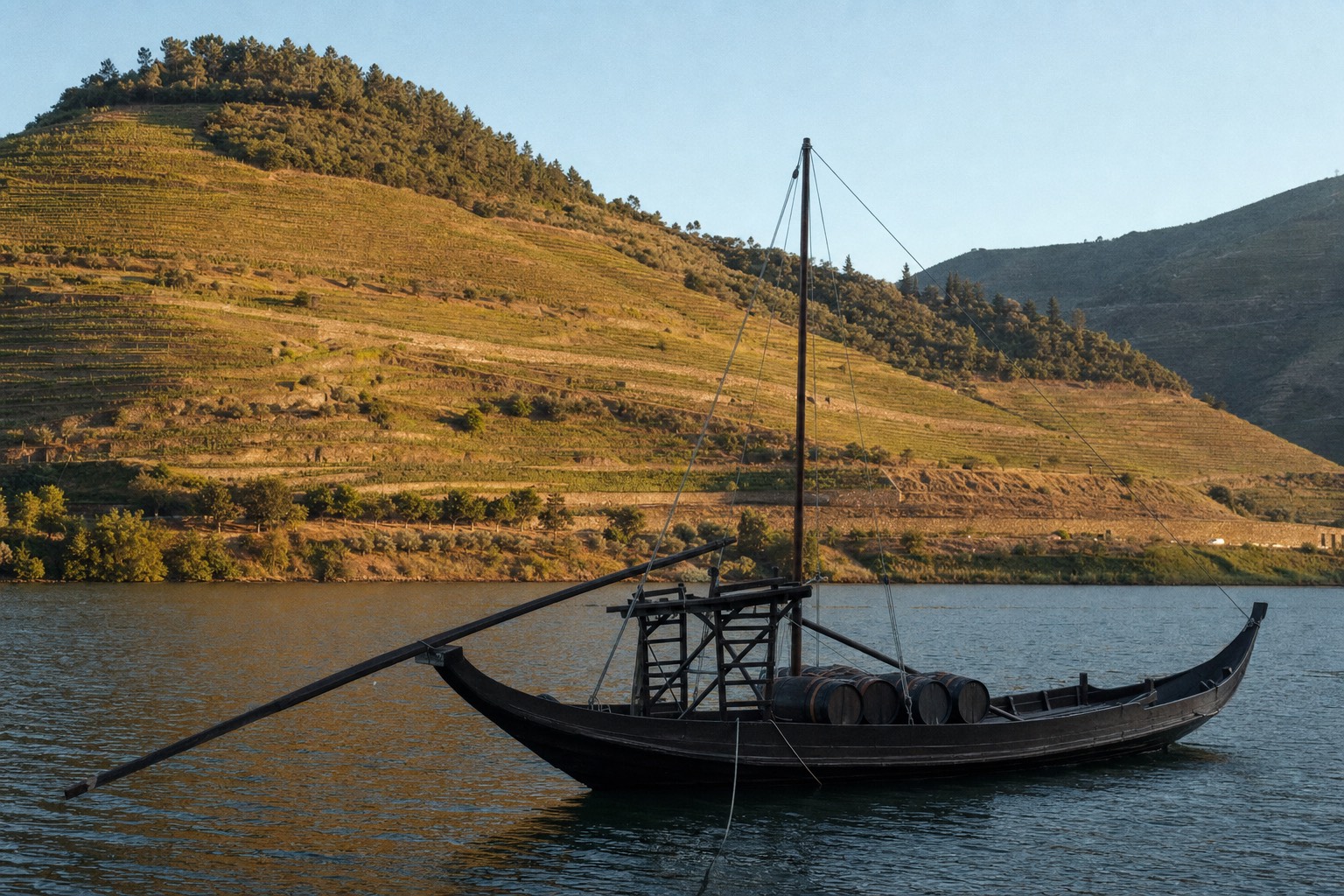
Stand on the quay at Pinhão for ten minutes and you will watch the same photograph being taken over and over: the flat wooden boat, the swan-neck bow, the terraced vineyards stacked behind it. I take visitors there most weeks, and almost nobody on the quay knows they are photographing a cargo truck. That is what a rabelo was. For centuries these boats did one job, hauling barrels of port down a river that regularly tried to kill the crews doing it. The story deserves five minutes of your time before you ride one.
What exactly is a rabelo boat?
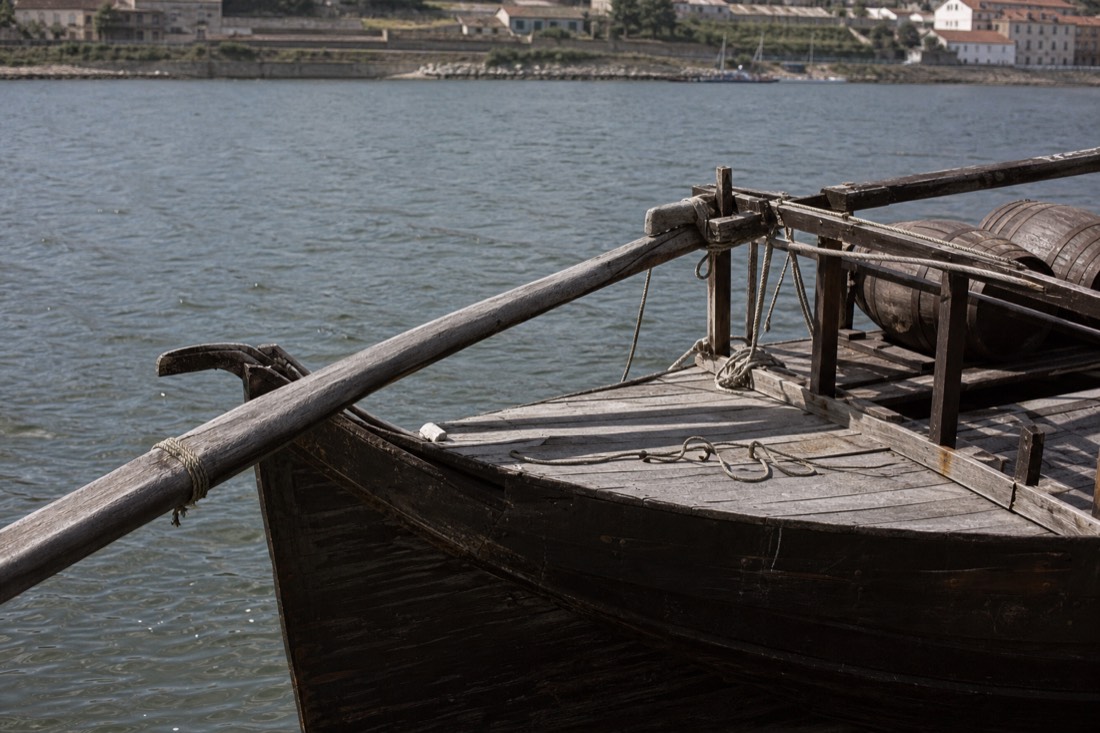
A flat-bottomed wooden cargo boat built for one river and one cargo: port wine barrels on the Douro. The flat hull and shallow draught let it cross rapids and shallows, and it was steered with a long timber oar trailing off the stern. The name means "little tail," after that oar.
Nothing about the design is decorative. The Douro before its dams was shallow in places, fast in others, and a keeled boat would have grounded or capsized where a rabelo slid through. The steering oar, the espadela, gave the helmsman a purchase on the water that no rudder could match in the rapids, and the crew worked the boat from a raised gangway so they could see over the cargo. The full construction story is on the rabelo boat's Wikipedia entry, which is better sourced than most of what gets repeated on the quays.
Boats ran 19 to 23 metres and carried anywhere from 40 to 100 barrels of wine with a crew of up to a dozen men. References to the boats on the Douro go back to the 13th century, and by 1792 the port trade's governing company had published formal regulations for the vessel. A boat type does not get its own rulebook unless serious money rides on it.
How did rabelos carry port down the river?
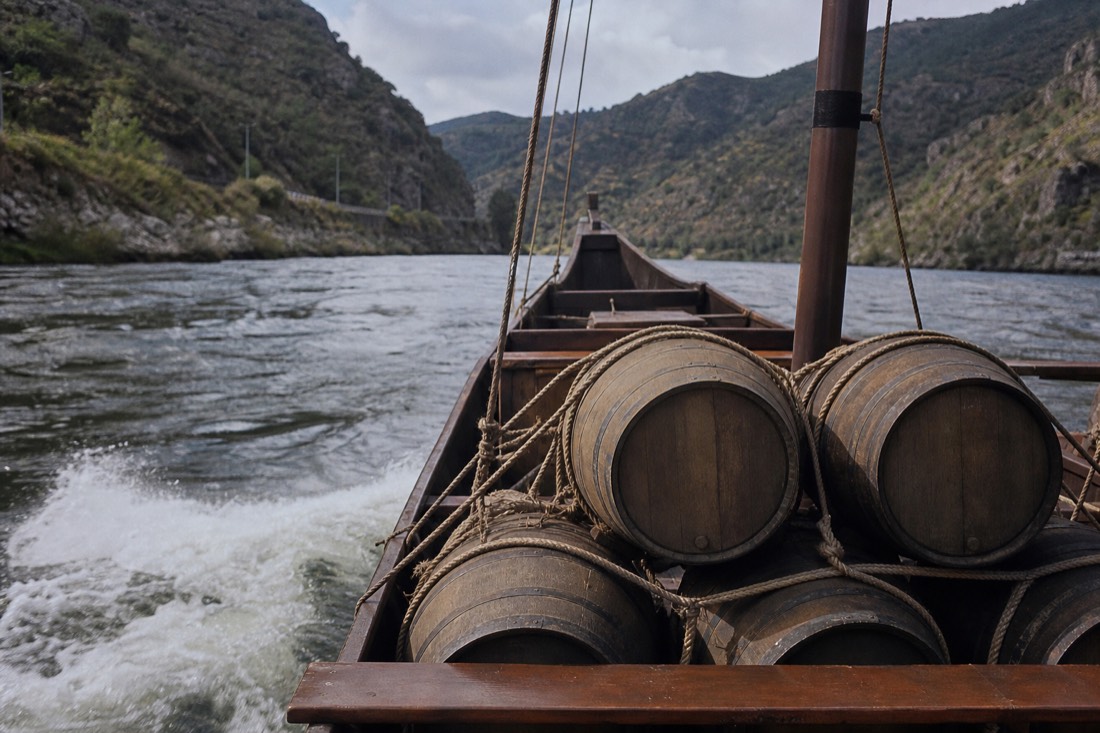
Downstream, dangerously, and fast. Wine made in the Douro Valley had to reach the trading lodges near Porto to be aged and shipped, and before rail and road the river was the only practical route: roughly a hundred kilometres of rapids, narrows and shoals run with up to 100 barrels lashed on deck.
The geography explains everything about port. Grapes grow in the hot upper valley; the wine ages in the cool lodges of Vila Nova de Gaia at the river mouth, a split you can still taste today and one we break down in what is port wine, explained. Somebody had to move the barrels between those two worlds. The rabelo crews did it in days when the river was kind and lost boats, cargo and lives in years when it was not. Crews poled, rowed and sailed back upstream against the current, which could take weeks.
It is the detail I wish more people knew on the Pinhão quay. The pretty boat in the photo was a workhorse on one of Europe's more dangerous commercial rivers, and the men who ran it rank among the toughest people this valley ever produced. Knowing that changes the ride itself, which is one reason I tell people to get on the water at Pinhão rather than only photograph it; the small-group day tour this site features includes a 50-minute cruise on a traditional rabelo there and holds 4.9 across 5,378 Viator reviews.
Why did the rabelo trade end?
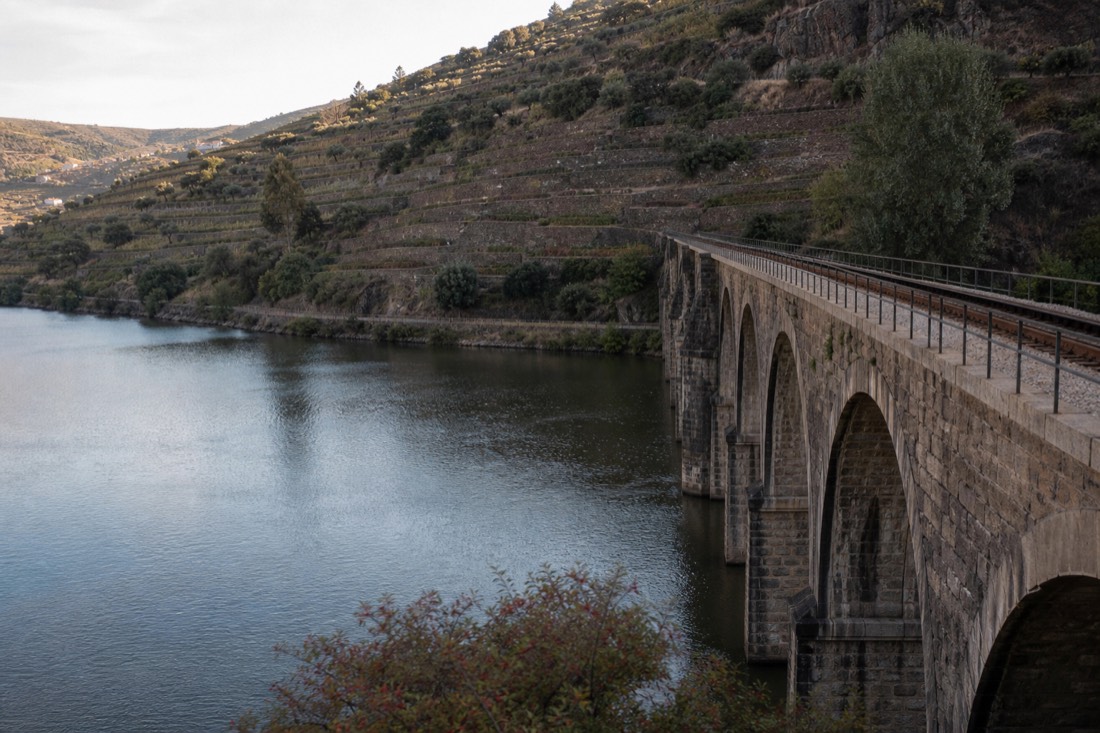
The railway took the cargo, then the dams took the river. The Douro line reached the wine country in the 1880s and moved barrels faster and more safely than any boat. Commercial barrel runs faded through the 20th century, with the last one generally dated to 1971, and from 1968 a chain of dams turned the wild river into calm steps of water.
The Linha do Douro, still one of Europe's great scenic train rides, was completed along the valley in 1887, and from that point the boats were fighting a losing race. Road tankers finished the job after the Second World War. The dam-building programme that began in 1968 then removed the rapids the rabelo had been designed to survive, so even the river the boat was built for no longer exists in its old form.
There is a neat irony in that. The dams that made the rabelo obsolete are exactly what make today's placid vineyard cruises possible. Whether one of the longer versions is worth your money is a separate question, which gets a full honest treatment in our guide to whether a Douro river cruise is worth it.
| Date | What happened |
|---|---|
| 1200s | Earliest references to rabelo-type boats on the Douro |
| 1792 | The port trade's governing company publishes formal rabelo regulations |
| 1887 | Douro railway line completed along the valley; cargo shifts to rail |
| 1968 onwards | Dams and locks begin taming the river's rapids |
| 1971 | Commonly cited date of the last commercial barrel run |
| June 24, yearly | Rabelo regatta on the Douro for Porto's São João festival |
Where can you see rabelo boats today?
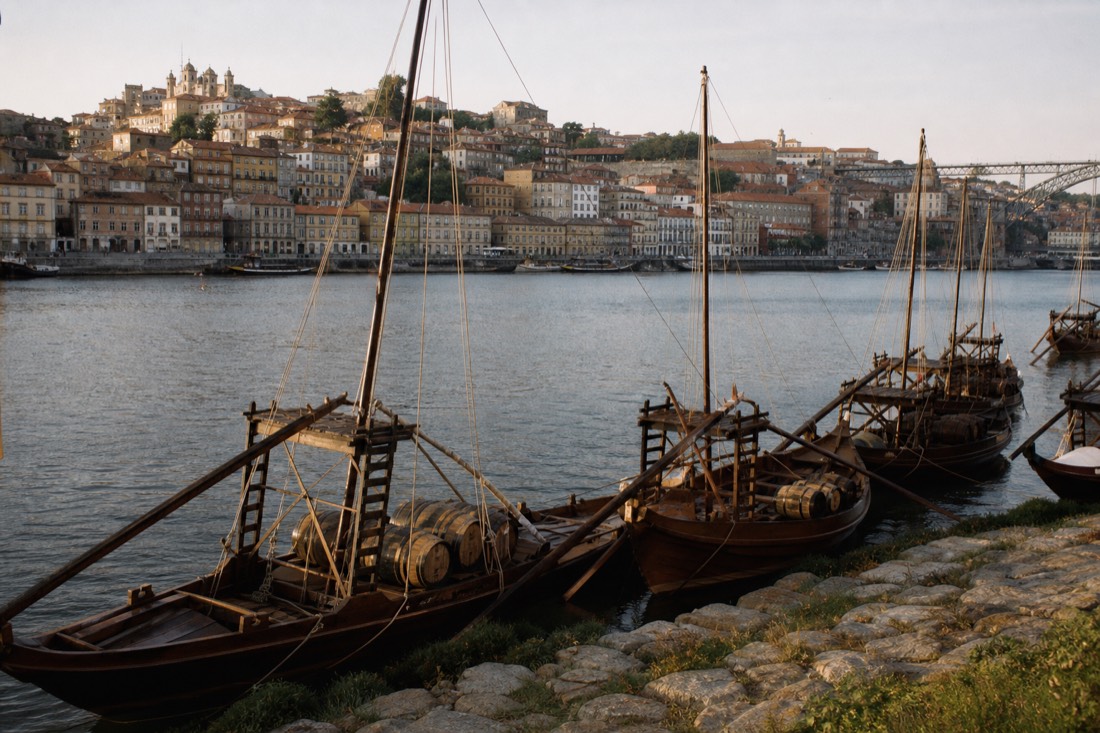
Three places. Moored along the riverfront at Vila Nova de Gaia and Porto, where port houses keep barrel-laden rabelos as floating emblems. Racing, once a year on June 24, when crews run a rabelo regatta for the São João festival. And working again at Pinhão, where restored and replica rabelos now carry tourists instead of barrels.
The Gaia boats are the ones most visitors meet first, lined up photogenically below the lodges with their sponsor barrels stacked on deck. They are real boats, but they are parked. The São João race is the opposite: one loud afternoon a year when the old skills get an airing on the water.
Pinhão is where the boat feels closest to its own history, because you are floating through the actual vineyards the barrels came from. The village itself rewards an hour before or after, and our Pinhão guide covers the tiled station and the quay. If your day leans more toward food and a private boat than history, the Douro and Amarante wine, food and river tour runs its cruise with only its own clients aboard and a tapas brunch on deck, rated 4.8 across 1,713 GetYourGuide reviews from $107.
Can you actually ride a rabelo boat?
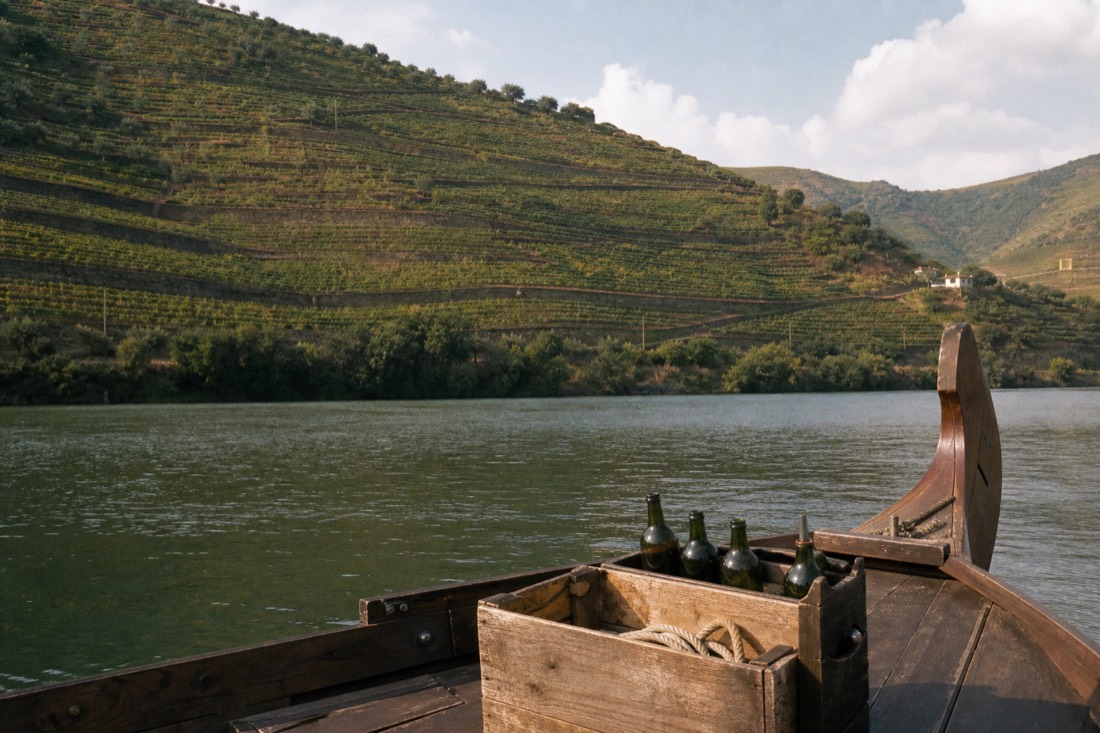
Yes, at Pinhão, on short vineyard-stretch cruises run aboard traditional rabelo-style boats. The most straightforward way from Porto is a day tour that builds the cruise in: the small-group day this site features includes a 50-minute rabelo cruise at Pinhão between its two winery visits and lunch.
You can also walk the Pinhão quay and buy a short cruise on the spot in season, which works fine if you have already solved the problem of getting to Pinhão, a two-hour-plus journey each way covered in our train guide. What the boat gives you that no viewpoint can: the terraces rising on both sides at once, from water level, at barrel height. The photographs everyone recognises from this valley are taken from exactly that seat.
If you want the ride without the logistics, the small-group tour this site features folds the 50-minute Pinhão rabelo cruise into a 9 to 10 hour day with two quintas and lunch, caps the van at eight people, and holds 4.9 across 5,378 Viator reviews. The listing states you can cancel free up to 24 hours ahead, which matters on a river that looks best under blue sky.
Either way, spare a thought mid-cruise for the crews who ran this stretch with a hundred barrels and no engine. The boat you are sitting on is the last working memory of them.