What to Wear on a Douro Valley Wine Tour: Advice From Someone Who Lives Here
How to dress for a Douro Valley wine tour: casual smart layers, shoes that survive cobblestones and cellar floors, summer terrace heat, and harvest mud.
 By Niko Stavros, Douro Valley wine tourism specialist
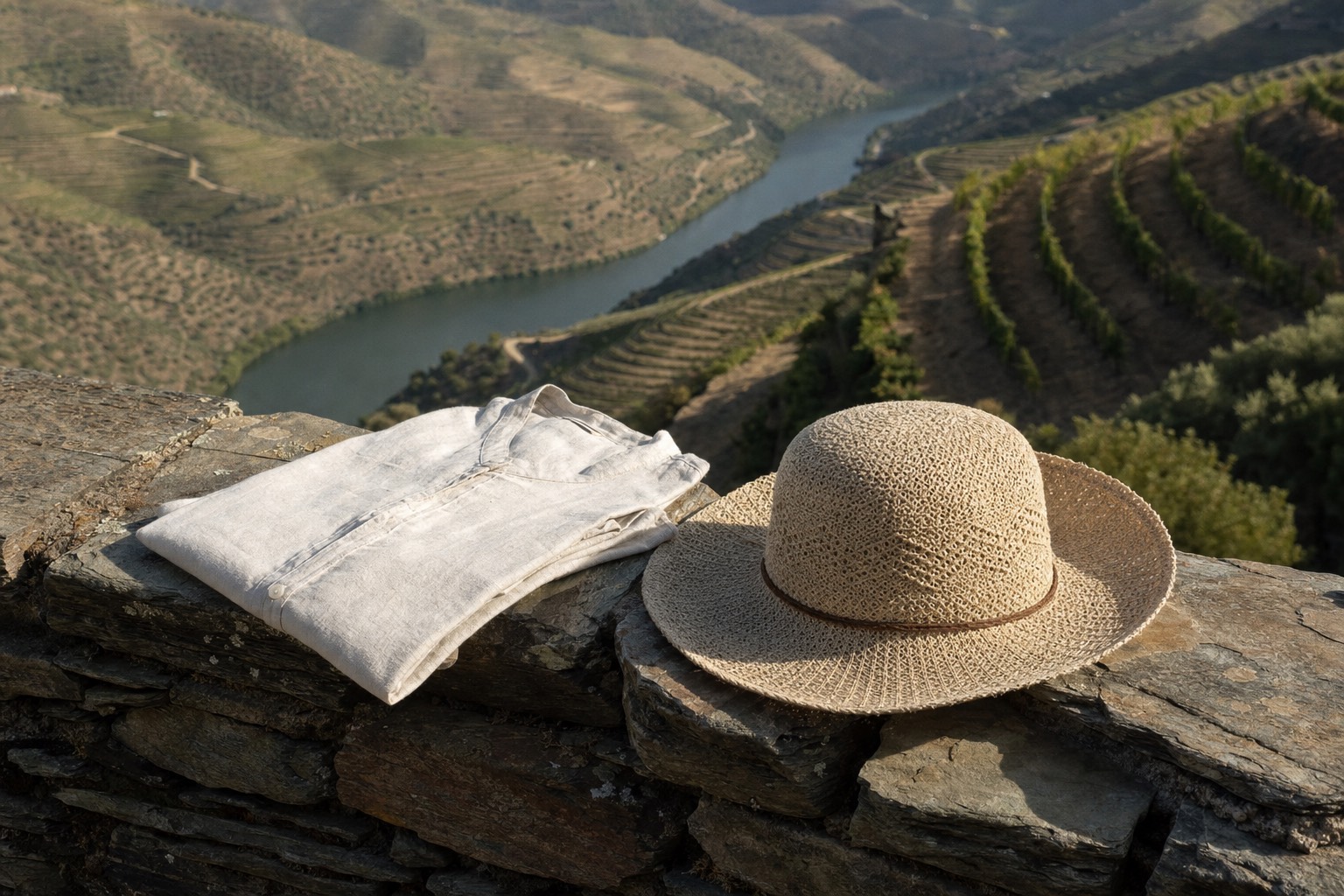
Every summer I watch the same scene at some quinta near Pinhão: a visitor steps off a sun-blasted terrace into the barrel cellar and their arms go straight into goosebumps. Thirty seconds earlier they were sweating. I have lived and guided in the Douro since 2022, more than a thousand travellers now, and clothing questions outnumber wine questions on the drive out from Porto. So here is the honest answer, the one I give in the van, covering the cellar chill, the cobblestones, the boat, the terrace heat, and what changes if you come for harvest.
How should you dress for a Douro Valley wine tour?
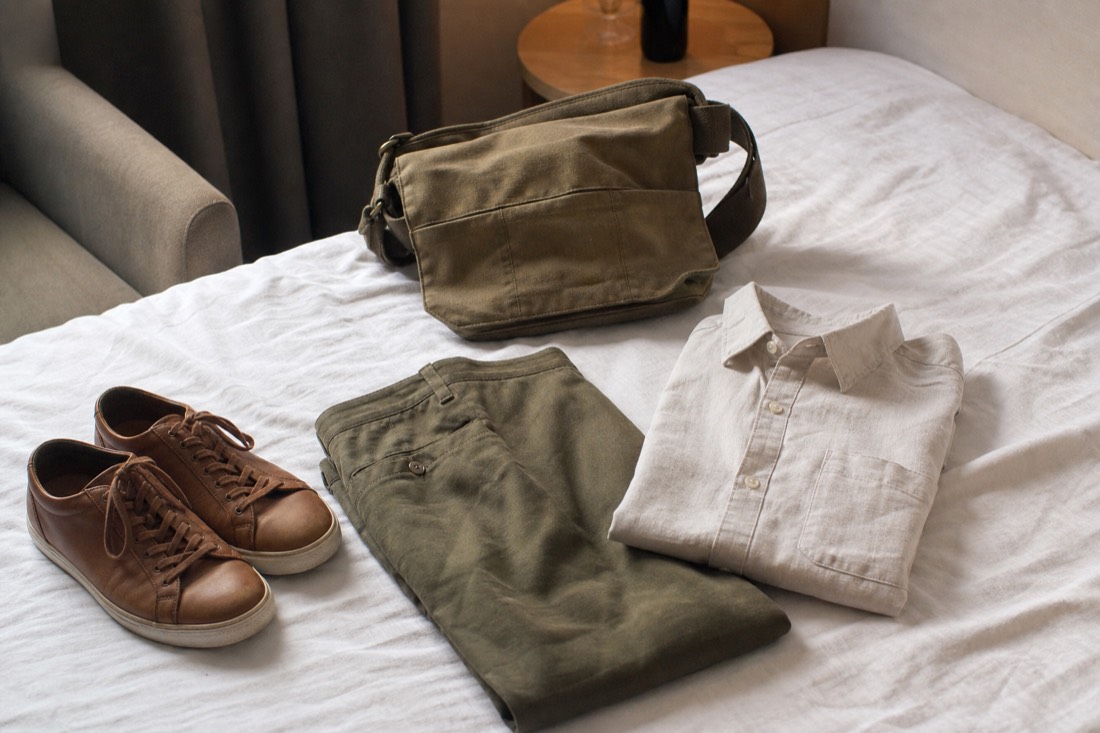
Casual smart, with one warm layer you can pull on and off. Think a breathable shirt or dress, trousers or shorts you can climb steps in, closed flat shoes with grip, sunglasses and a hat. Nobody dresses up: this is a farming valley, not a Michelin dining room, and the wineries genuinely do not care.
The phrase I use is "clothes you would wear to a nice lunch at a friend's farm." Portuguese quinta staff wear work boots and fleece vests half the year. On the tours I guide, the best-dressed person is usually the least comfortable one by mid-afternoon, because heels, stiff blazers and delicate fabrics all lose to the Douro's actual surfaces: granite, schist gravel, barrel-room concrete and boat decks.
There is one styling note worth keeping. Dark colours hide red wine better than white linen does, and at a standing tasting over a barrel, drips happen. I aim for mid-tones: olive, navy, terracotta. You still look good in the photos at the viewpoints, which, let's be honest, is half the packing decision.
Why do you need a layer when it is 35 degrees outside?
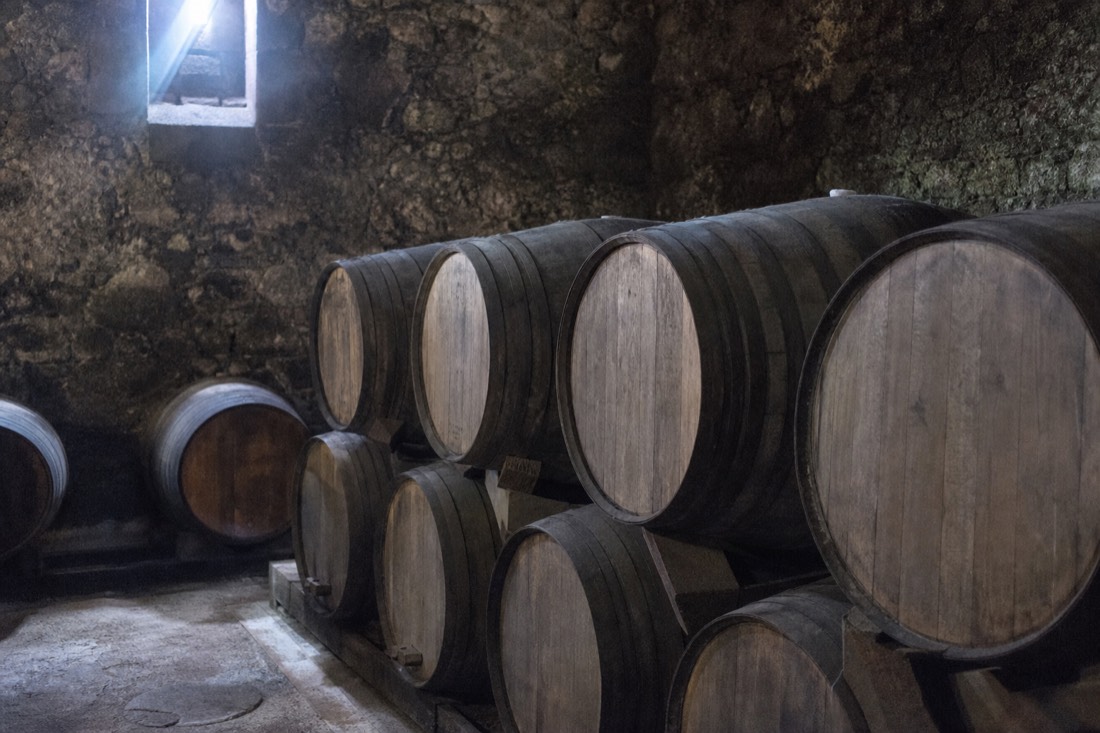
Because the tasting happens where the wine lives. Ageing cellars are kept cool and damp year round, in the 13 to 16 degree Celsius range, while the terrace outside can be pushing 38 in July. You will cross that 20-degree gap several times in one visit, so a packable layer earns its place.
Port houses are open about this: the thick-walled lodges hold a stable cool temperature all year because the wine demands it. Taylor's describes exactly this in its own lodge and cellar pages, and quinta cellars up the valley follow the same logic. A cellar visit runs 20 to 40 minutes. That is long enough to get properly cold in a sundress.
My fix is boring and it works: a thin merino or cotton overshirt that rolls to the size of a water bottle. Evenings matter too. The valley cools fast after sunset, and reviewers of the off-road sunset picnic tour, a new GYG listing from $163 with a picnic at Valença do Douro, will be sitting outdoors at exactly the hour that layer stops being optional.
What shoes survive cobblestones, cellar floors and boat decks?
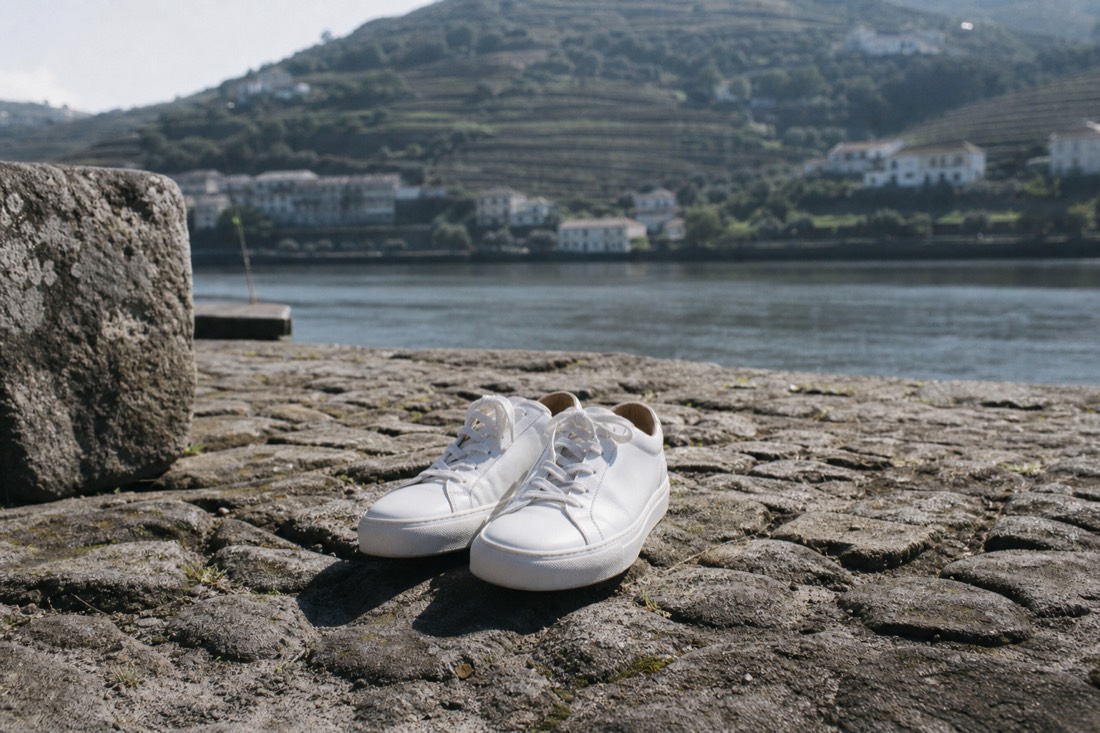
Closed flat shoes with real tread: clean sneakers, loafers with rubber soles, or low walking shoes. You will cross polished cobblestones in Pinhão, wet stone steps at quintas, gravel between vine rows and a boat gangway in one day. Heels, flip-flops and slick leather soles fail at least one of those.
The surfaces are the argument. Pinhão's quay and the older village lanes are cobbled, and cobbles polished by a century of feet turn slippery with the first splash. Boats add spray: on a rabelo cruise you board over a gangway and the deck near the rail catches drops even on calm days. The 50-minute Pinhão river cruise on the day tour this site features runs on a traditional rabelo, and I have watched flip-flops skate on those boards more than once.
Quintas are the part people underestimate. A "short vineyard walk" in the Douro means schist gravel and uneven stone steps between terraces, sometimes at a real gradient. Nobody needs hiking boots for it. Everybody needs tread. If your packing list has one non-negotiable item, this is it.
What should you wear for summer heat on the terraces?
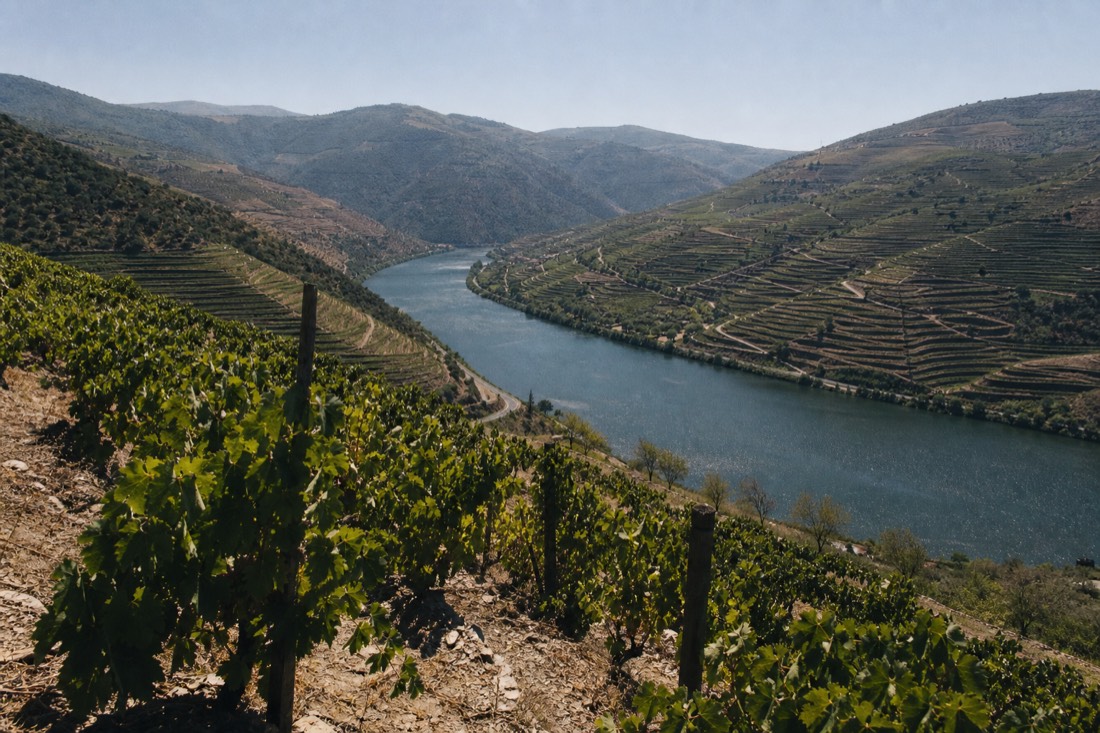
Light, loose, covered. The Douro is one of the hottest corners of Portugal: July and August afternoons regularly sit in the mid-30s and can pass 40 degrees on the schist terraces, which store and radiate heat. Breathable fabrics, a real hat, sunglasses and sunscreen are the uniform. Skip anything tight or black.
Summer here is not coastal Porto weather. Pinhão averages far hotter than the coast, with peak-summer highs that routinely reach 35 to 40 degrees in the valley floor. The terraces make it hotter still: dark schist soaks up sun all day and breathes it back at you while you stand between vine rows listening to how tawny is aged.
What works, from someone who spends every summer out here: linen or thin cotton with sleeves you can roll, shorts or loose trousers, a brimmed hat rather than a cap, and a refillable water bottle. The small-group day tours build the hottest hours around lunch indoors and the breezy river cruise, which is smart sequencing. If you are choosing your month rather than your outfit, that decision has its own page in our best time to visit the Douro Valley guide.
What changes if you visit during harvest, or in winter?
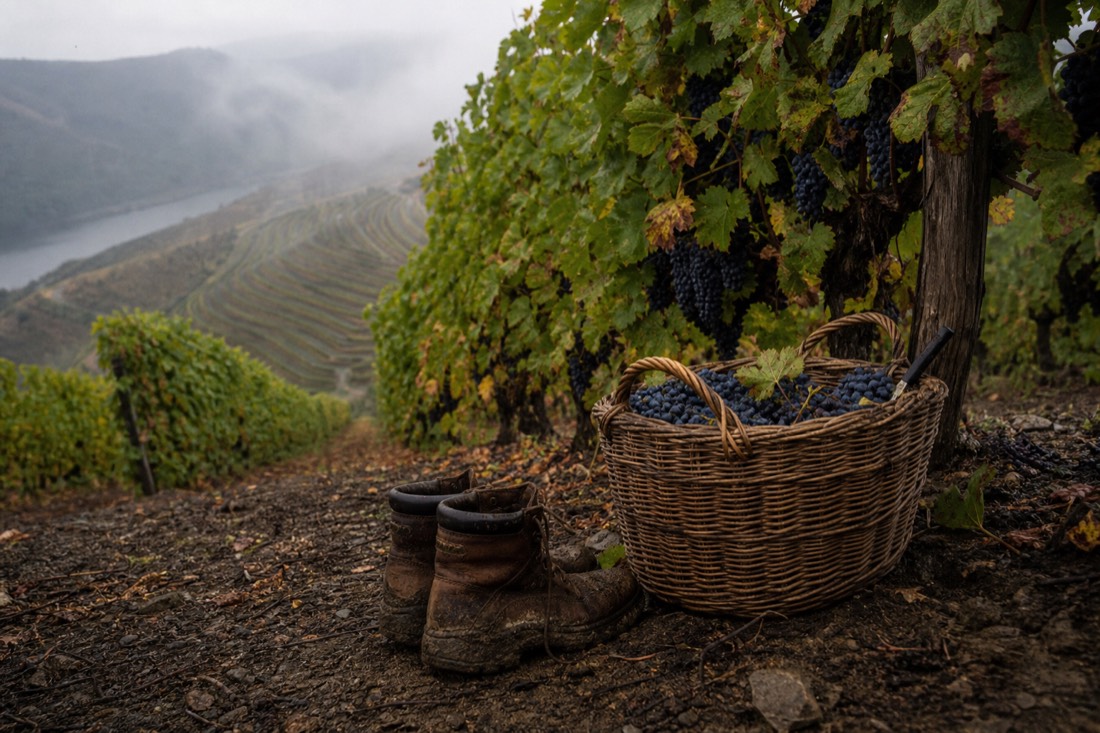
Harvest, roughly early September to mid-October, adds dust, grape juice and real mud if you join the picking, so wear clothes you can sacrifice and shoes you can hose off. Winter flips the problem: 8 to 14 degrees, rain, slick stone. Waterproof shoes and a proper jacket replace the sun kit.
Vindima timing moves with the year, but the pattern is stable: whites come off first from late August, reds through September, and the busiest window for visitor harvest programmes falls mid-September to early October. If a quinta lets you pick or, better, stomp grapes in a lagar, treat your outfit as a casualty. Juice stains do not negotiate, and vineyard rows after a September rain produce a specific orange-brown mud that never fully leaves white soles. The whole season has its own story in our harvest season guide.
A standard tasting tour during harvest needs nothing special beyond the normal kit, since you watch the chaos rather than join it. The small-group tour this site features runs the same two-quinta, lunch and cruise format through harvest with a max of 8 guests and free cancellation up to 24 hours, so a weather-driven outfit rethink never costs you anything.
Here is the whole year on one table, the version I send friends before they book flights:
| Season | Daytime reality | Wear | The mistake I see |
|---|---|---|---|
| Jun to Aug | 30 to 40C on terraces, cool cellars | Linen, hat, closed flats, thin layer | All-black outfits, flip-flops |
| Sep to mid-Oct (harvest) | Warm days, dusty or muddy vineyards | Sacrificial clothes if picking, normal kit if touring | White sneakers in a lagar week |
| Mid-Oct to Nov | Mild, golden light, rain arrives | Layers, light rain jacket, grippy shoes | No jacket for the boat |
| Dec to Mar | 8 to 14C, wet stone everywhere | Waterproof shoes, warm layer, umbrella | Dressing for "Portugal" not for a river valley |
| Apr to May | 18 to 26C, greenest valley | The casual-smart kit exactly as above | Overpacking; this season needs least |
One last packing note: whatever you wear, the van, the cellar, the terrace and the boat are four different climates in one day. Dress for the transitions, not for any single stop, and you will be the comfortable person in the group photo. For how the full day actually unfolds hour by hour, see the one-day Douro itinerary.