Peso da Régua or Pinhão: Which Douro Hub Town Deserves Your Time?
Régua runs the Douro Valley and Pinhão poses for it. A local wine guide compares the two hub towns honestly: the Museu do Douro, the tiled station, trains, boats, which one the day tours use, and where to sleep.
 By Niko Stavros, Douro Valley wine tourism specialist
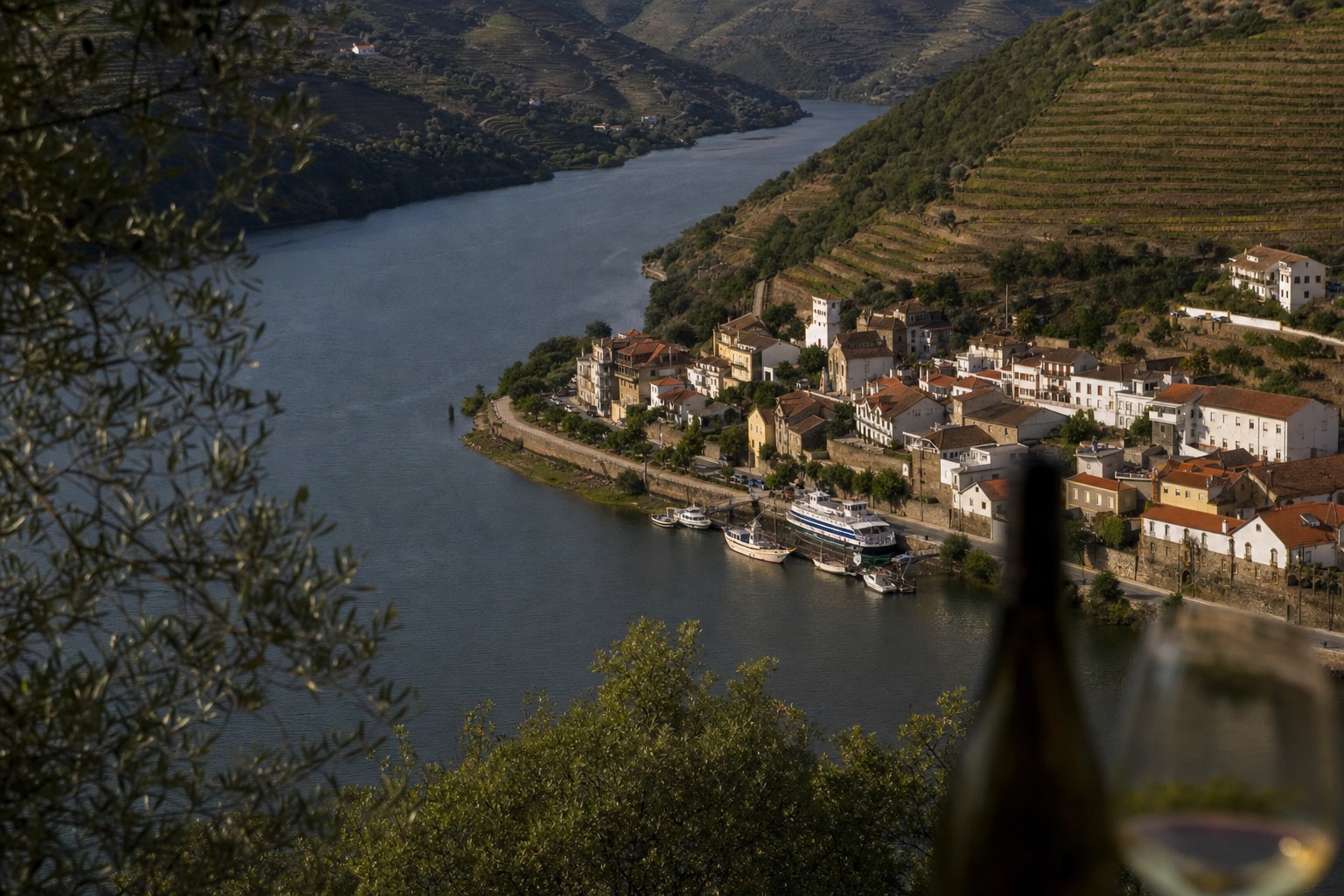
At eight in the morning Peso da Régua smells of diesel, coffee and bread; Pinhão smells of river water and cut vine canes. I drive through one or both of them most working weeks, and I have watched a lot of visitors pick the wrong one for what they wanted. So here is the honest comparison: the working capital against the postcard, and how to use each without wasting your single day in the valley.
What is the real difference between Peso da Régua and Pinhão?
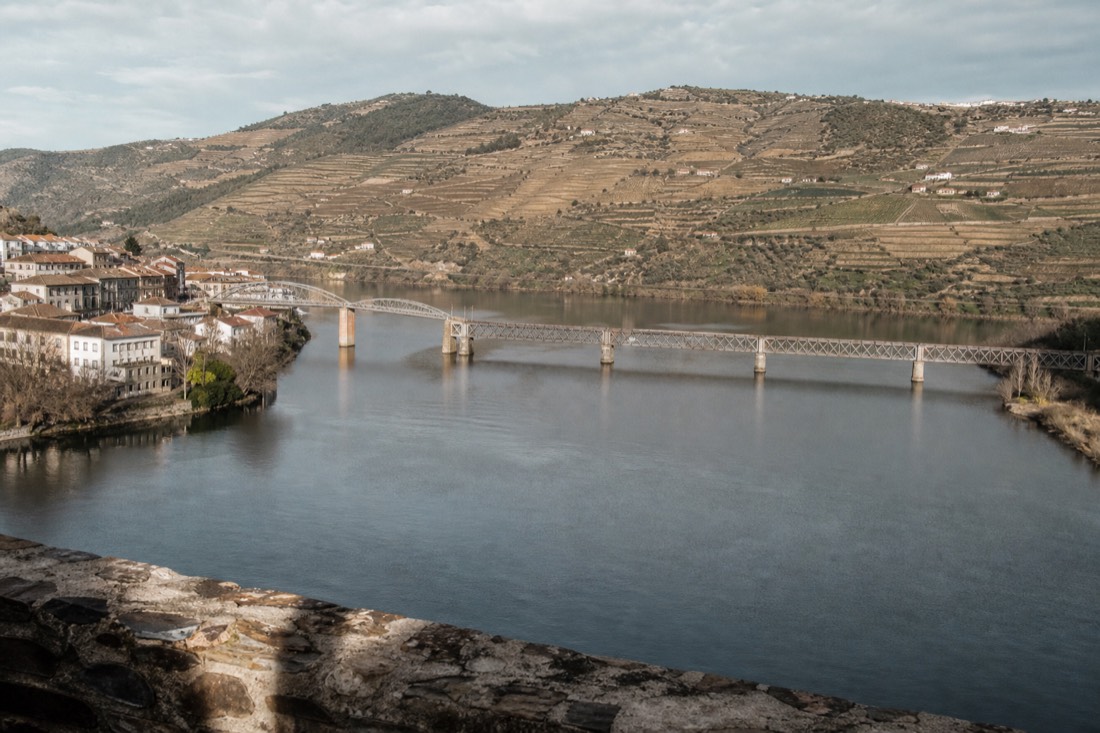
Régua is the administrative and commercial capital of the demarcated wine region: bigger, busier, home to the Museu do Douro and the main train hub. Pinhão, about 20 km upriver, is a small village set in the valley's most dramatic amphitheater of terraces, with the famous tiled station and most of the boat piers. One runs the valley; the other poses for it.
Neither town is large, but the difference in character is immediate. Régua spreads along a broad, calm stretch of river with bridges, supermarkets, a proper riverfront promenade and wine-institution buildings that have governed the trade for centuries. Pinhão is one street, one station, a handful of quintas within walking distance, and terraced hillsides rising straight out of the water on every side. The day tours vote with their schedules: the small-group tour this site features gives Régua a 15-minute stop and hands Pinhão the 50-minute rabelo cruise, which is roughly how most first-timers end up weighting the two towns.
| Peso da Régua | Pinhão | |
|---|---|---|
| Feel | Working river town, unglamorous, real | Tiny, scenic, tourism-facing |
| Star sight | Museu do Douro | The azulejo-tiled railway station |
| Trains from Porto | Direct, roughly 2 hours | Same line, continue past Régua |
| Boats | Cruises and larger boats on the wide stretch | Most small-boat and rabelo piers |
| Wine access | Regional institutions, quintas a drive away | Several famous quintas close by |
| Best for | Logistics, rainy-day culture, budget meals | Photos, short cruises, romance |
What is Peso da Régua actually like?
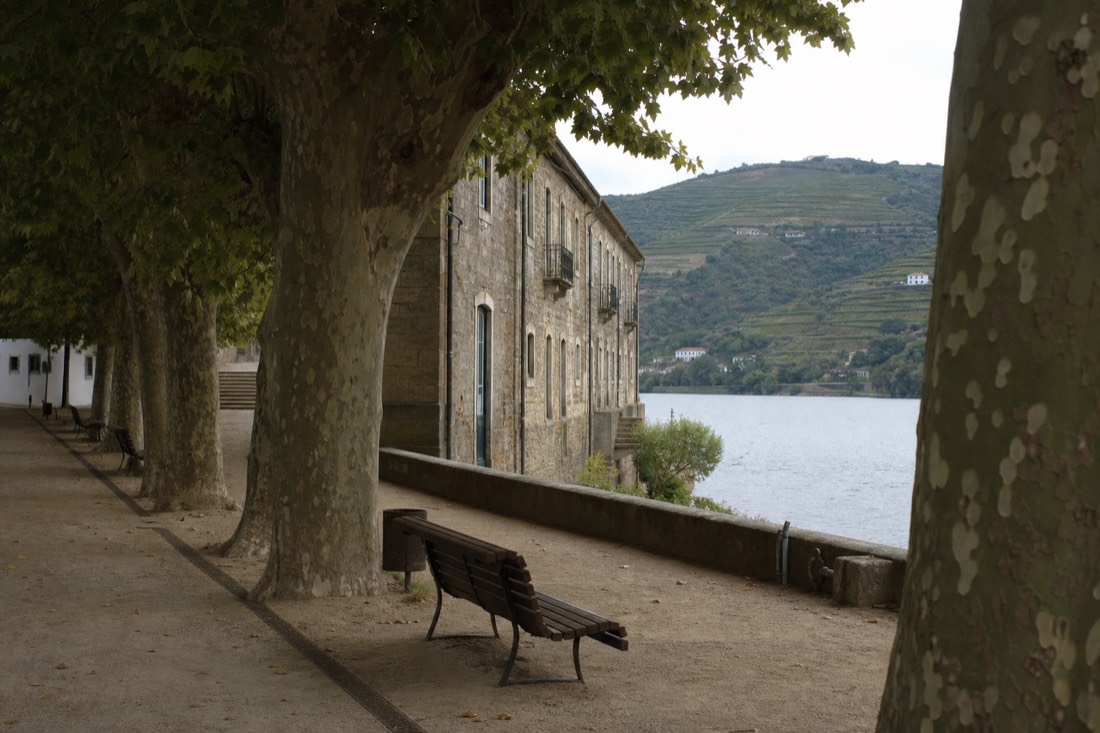
A working town first and a sight second, and better for it. The one unmissable stop is the Museu do Douro, the regional wine museum housed in the restored Casa da Companhia Velha, the 18th-century headquarters of the company that once policed the world's oldest regulated wine region. It has a wine bar overlooking the river.
Give the Museu do Douro ninety minutes. It explains the thing you will spend the rest of the day looking at: why these terraces exist, how Port travelled downriver, and what 250 years of regulation actually meant for the families farming schist. It opens daily, 10:00 to 18:00 in summer, and the wine bar over the water is the cheapest good glass of Port in the valley's tourist orbit.
Régua is also where the train logic favors you. The Linha do Douro runs direct from Porto in about two hours; a typical morning departure leaving just after 9 arrives in Régua just after 11.
The full rail plan, including where to sit for the river side of the carriage, is in the Porto to Douro Valley by train guide.
Why does Pinhão get all the photographs?
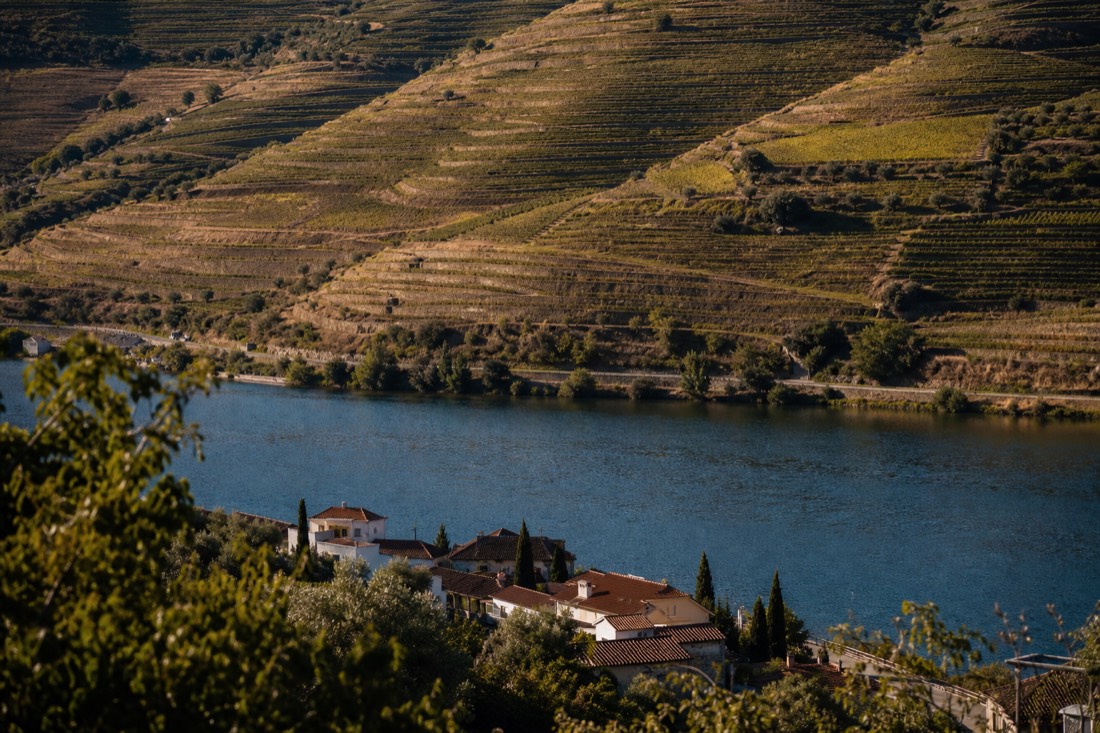
Because the valley narrows and steepens around it until the terraces feel like stadium seating, and because its little railway station is an artwork: 24 blue-and-white azulejo panels from 1937, around 3,000 tiles, painting the grape harvest and the rabelo boats that once carried Port downriver to Gaia.
The station is free, always open to the platform, and worth twenty minutes even if you arrived by car. From the village, everything scenic escalates quickly: quinta terraces begin at the edge of town, and the single best village viewpoint in the whole valley, Casal de Loivos, hangs directly above Pinhão, a short drive up a narrow road. I cover that terrace and its rivals in Douro Valley viewpoints and photo spots.
What Pinhão does not have is much to do after the boats stop. Two streets, a few tasting rooms, dinner options you can count on one hand. That is not a criticism; it is a scheduling fact. The deeper dive is in the Pinhão guide.
Which town do the day tours actually use, and why?
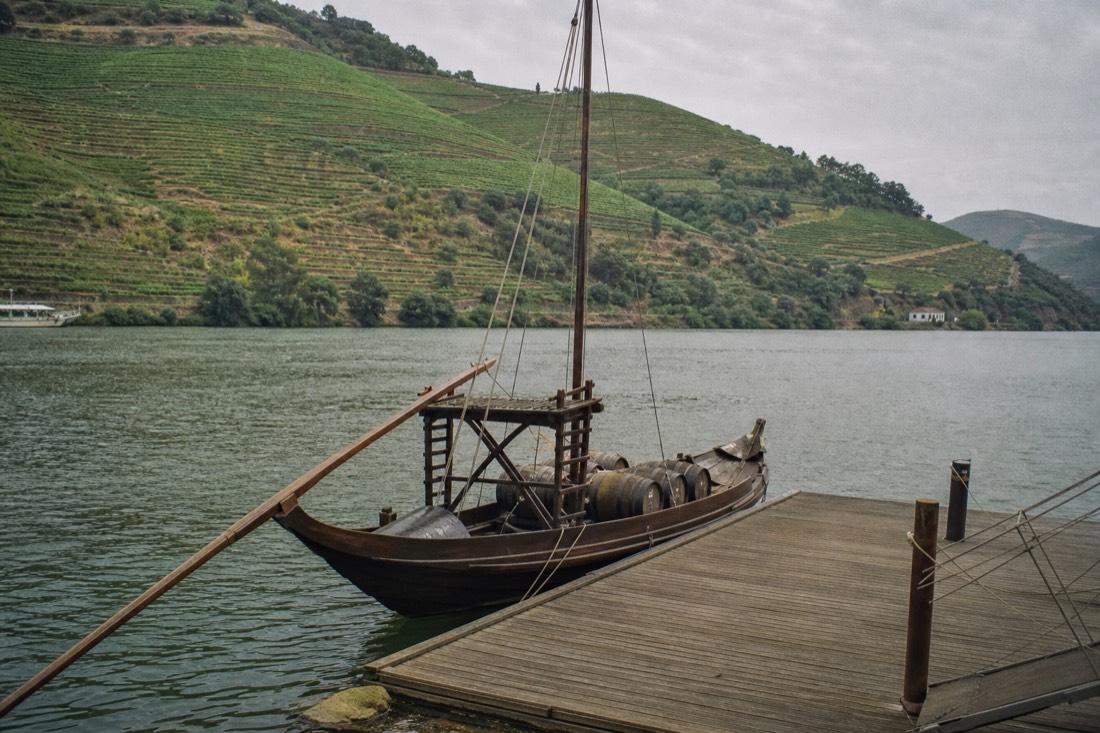
Most good day tours touch both, for different jobs: Régua as the gateway pause where the valley opens up, Pinhão for the boats, because the prettiest short cruising water in the Douro is the narrow terraced stretch around it. The itineraries publish this split, so you can check any tour before booking.
The small-group tour this site features is a clean example: its published itinerary includes a 15-minute stop at Peso da Régua, tastings at Quinta do Tedo and Quinta do Beijo, lunch, and a 50-minute cruise on a traditional rabelo boat at Pinhão, all with a maximum of eight guests. It holds 4.9 across 5,378 Viator reviews with 98% of travelers recommending it.
The water-first alternative makes the same choice from the other direction: the Douro and Amarante river-and-food day runs its boat cruise from Pinhão with a tapas brunch served aboard, restricted to the operator's own clients, and carries 4.8 across 1,713 GetYourGuide reviews from $107. Whether any cruise is worth your one day is a fair question, and I argue it honestly in is a Douro river cruise worth it.
Should you spend a night in either town?
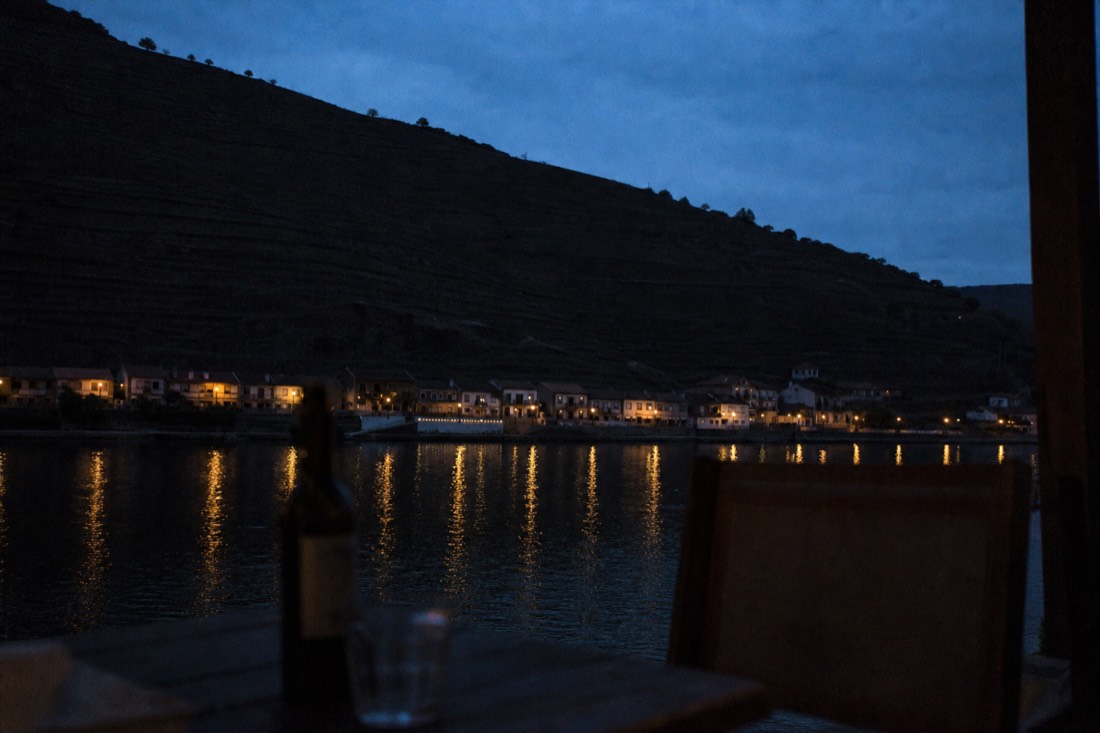
For most first-timers, no: a day reaches both towns comfortably, and Porto makes the stronger base. If you do stay over, the split repeats itself. Pinhão for romance and waking up inside the scenery; Régua for train logistics, restaurant choice and a rainy-day museum.
I say this as someone who lives in the valley and loves its nights: the towns go very quiet after dark, and that is either the entire point of your trip or a planning mistake, depending on who you are. Couples celebrating something should sleep upriver at least once. Everyone else can weigh it properly in stay in Porto or the Douro Valley.
One practical note for overnighters: staying in the valley unlocks evening experiences that day trips from Porto cannot reach. The off-road wine tour with sunset picnic, a new listing without a review history yet, picks up in Régua, at Quinta da Pacheca and at ten other valley points, runs a 4x4 through the vineyards to a Quinta do Tedo tasting, and ends with a picnic at Valença do Douro timed to sunset, from $163. That is the kind of hour the day-trippers drive home through.
Choose Régua if you want the valley to work for you. Choose Pinhão if you want it to perform. Better still, do what the tours do and refuse to choose.